
I've gotten angry in my life-- really, really angry. I mean the huff-and-puff, tear-your-hair-out, eyeballs- pointing- in- different- directions kind of mad. But it wasn't until I started taking anger management classes that I began to get a good look at the very nature of emotion.
I'm not a doctor, so I won't try to explain how it all works-- I'm not that sure how it all works myself. I only know that in hearing about the process, I developed an awareness of when my anger would build up. I became analytical and fascinated by how the release of different chemical compounds into my bloodstream triggered the effect known as 'emotion'.
Scientists know that the very act of trying to measure a phenomena changes it, and a similar effect happened to me. I would find myself at the beginning of an emotion-producing event (read: an angry moment), and instead of rushing into the emotion, I would begin to think about the events leading up to the anger. I'd take apart the moment in my head and try to determine what was actually happening-- WITHOUT letting the feelings overtake my calm and reason.
I had to analyze the situation rationally.
I tell you, the result was startling! Instead of reacting to an angry person with an autonomic mirrored emotion, I found myself running down a checklist to see if it was 'worth it' to holler back:
• Did I have anything to lose by engaging in an argument?
• Is this worth my time?
• Do I even care?
• Is this my problem... or theirs?
The last item on the list was an eye-opener for me the first time I thought of it. I began to see that because we can't read each other's thoughts, a great potential for miscommunication is possible. I don't know what is going on inside the mind of somebody who is yelling at me because I dropped a book. Are they in emotional turmoil about another matter? Was it THEIR rare and expensive book that I just dropped? Or was a painful emotional event triggered by their dropping of a book in their past sometime?
I can't expect to know the answer to these questions immediately for each event-- it's usually not a good time for a personal interview! But what I CAN expect is to know the answer to those questions when posed to ME. And there's the magic:
I'm NOT in emotional turmoil about another matter! It's not MY rare and expensive book that I just dropped! It WASN'T a painful emotional event triggered by my dropping of a book in my past sometime!
So because I have answered those questions in the negative, I realize I have no emotion at stake in the moment! This is important: I HAVE NO REASON TO BE ANGRY BACK! So they yell at me... so what? This emotion is THEIRS, completely. My response should be nothing more or less than a chipper "Oops! Sorry!" and then a moving on with my day.
This little realization eliminated virtually all the anger I might have had during 'tense moments' with strangers, and most of the emotion produced during events with friends, family and business associates.
All that remained were the most problematic of people: The BUTTON PUSHER.
Button pushers are control freaks and manipulators, doing what they do to achieve some selfish purpose. Button pushers WANT my angry reaction, and know me well enough to know what has angered me in the past. My trigger points, if you will. So they pull the trigger on one button after another until I display the anger that they are looking for. When I do, and I always have in the past, it is time for them to manipulate me, for I am no longer in control nor thinking rationally.

The value of situation analysis is most evident when thwarting the button pusher. The problem, however, is in keeping the presence of mind to begin the process. In other words:
I have to keep from getting mad so I can analyze the situation and come up with a solution, so I can keep from getting mad...
!!!
So how do I do that? Constant evaluation. If I know the person is a button pusher, I dismantle every word that comes out of their mouth, starting with 'Hello'. This way I remain objective and scientific and am less 'in the moment' when they utter a manipulative statement. I hear the thought and know the intent.
Button Pusher: Hi.
Me: Hi.
BP: I hear your daughter got another tattoo (BP knows I'm not a fan of tattoos on my daughter). It sure sucks that you can't control her.
Button pusher wants to rattle me, keep me off-balance so they can achieve their goal, and so tries to stir up an emotional cauldron to achieve that. Since I know that's what he/she is trying to do, my best answer will not feed into that and will show unconditional support for my child:
Me: They're starting to grow on me-- she always picks clever or artistic tats. I like that she thinks about them before getting them.
I can leave it there. But if I want to zing back I can use their own tactics against them:
Me: But I heard your son was arrested for check kiting. Apples sure don't fall far from the tree, huh?
But since my objective is to avoid anger and argument, I would just think that last sentence, and move on with my day, smugly self satisfied that it was I who was the controller, not the controlled.
When I don't know the manipulator they're much more difficult to spot. The button pusher can catch me off guard. So how do I protect myself from them?
I use several techniques. Remember, we're talking about a complete stranger in this situation, so the aforementioned question applies:
Is this my problem... or theirs?
Since they are a stranger, they know nothing about me-- they're just fishing to see what bites. I discourage their attempts by being vague and positive and moving on:
"I'm a stranger to you, so I'm sure you're mistaken. Have a nice day."
Or I could expose their attempts, since the manipulator counts on the sneak attack:
"Hey, are you trying to push my buttons? What are you after?"
Or I could play innocent:
"Wow, you're so nice! Give me your number-- do I have a gal/guy for you!"
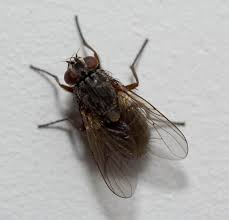
Wait... I'm off topic. I first chose these pictures and heading because I wanted to explore the 'fly on the wall' solution to anger management, and reading back I see I did that, though not in so many words.
As a fly on the wall of your dealings with others, you can remain impartial and detached while you examine the conversation for manipulation, smokescreens and sparks. You'd be a little like the guy who runs your brain, who filters and processes all events and then sends down the proper emotion so the body can react in the outside world. If you've ever seen a TV show where the character has a decision to make and suddenly a little devil and a little angel pop up onto their shoulders, both whispering conflicting advice to him, then you can visualize what I'm trying to say. Just flick that little devil guy off your shoulder-- he's not helping anything.
After all these words, it all boils down to just four:
TRY TO REMAIN DISPASSIONATE.
Which I guess is like saying that when you hit your thumb with a hammer:
TRY NOT TO CUSS.

No comments:
Post a Comment